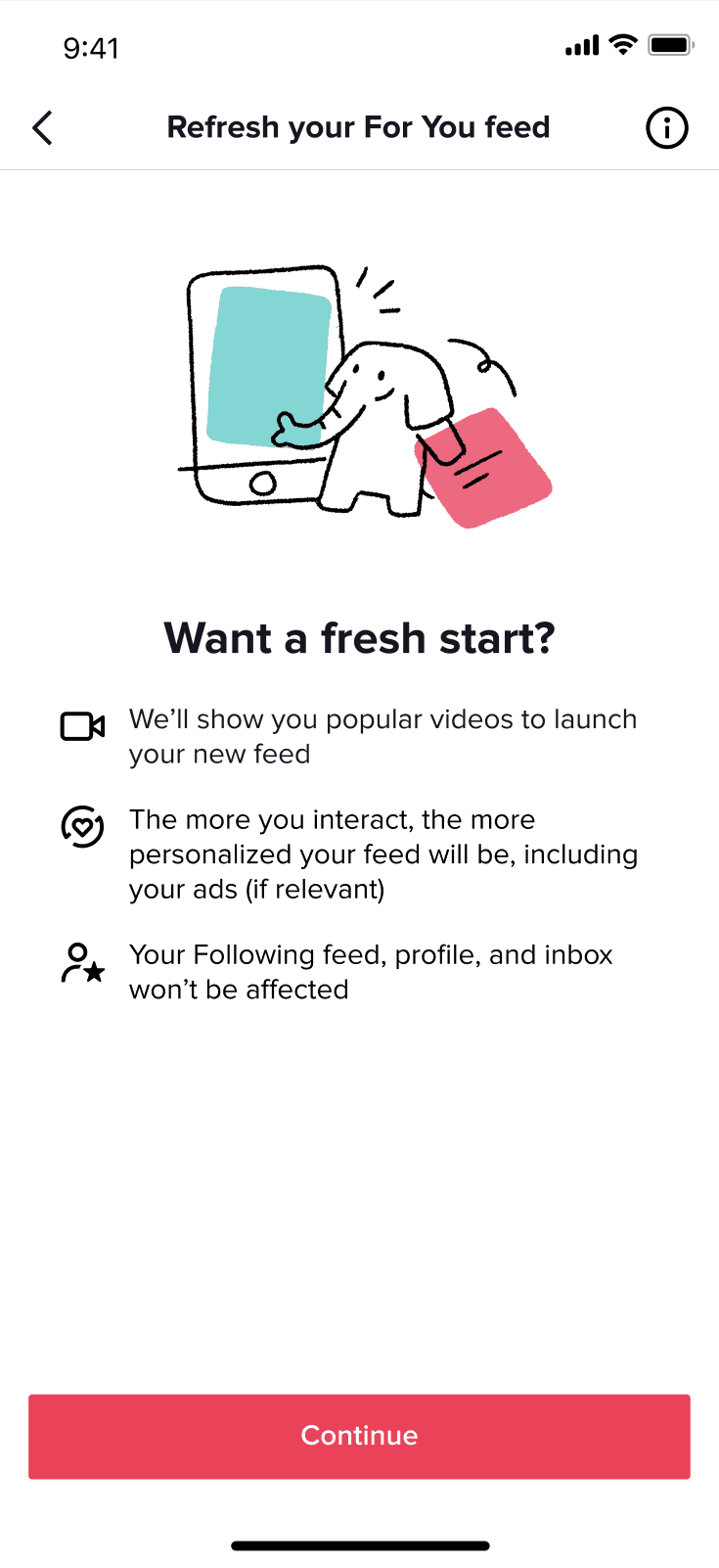
I designed TikTok's feed refresh feature to address regulatory concerns about algorithmic transparency while achieving 85% user adoption and 81% positive press sentiment. The challenge was turning a compliance requirement into something users actually wanted—and we succeeded.
When regulators and users both say your algorithm is the issue:
In 2022, TikTok faced mounting criticism from regulators who claimed its algorithm amplified harmful content.
At the same time, 72% of users felt they lacked control when using technology (Pew Research Center).
The challenge: Design a feature that satisfied regulatory demands, improved user sentiment, and generated positive press—without breaking the algorithm that made TikTok successful.
Who I was designing for: TikTok users stuck in content loops but didn't want to lose the personalization that made their feed valuable.
What they needed:
A way to break out of repetitive content without starting over completely
Transparency about what "refresh" actually meant
Reassurance that their Following feed, profile, and inbox wouldn't be affected
My responsibilities:
Designed all in-product messaging across 6 screens
Balanced technical accuracy with user-friendly language
Navigated feedback from 8+ teams: product, legal, policy, government relations, privacy, communications, algorithm engineers, and user research
The challenge: Get everyone to agree on accurate, simple language while keeping user clarity at the center.
What I was working with:
Timeline: 6 months from kickoff to launch
Technical limitation: The algorithm couldn't truly "reset"—we could only show popular videos to re-seed recommendations. I needed language that was both technically accurate and user-friendly.
Stakeholder complexity: Every word needed approval from legal, policy, algorithm engineers, and communications. Each had different concerns:
Legal: "Don't promise anything we can't deliver"
Algorithm team: "Don't oversimplify how this works"
Product: "Keep it simple—users won't read long explanations"
Regulatory risk: Any misleading language could escalate government investigations.
The naming battle - "Reset" vs. "Refresh":
Product wanted: "Reset your feed"—powerful and clear.
But the algorithm team pushed back: "That's not technically accurate. We can only refresh the feed with popular content."
I created a comparison document showing the tradeoffs and presented it across multiple stakeholder reviews. After weeks of negotiation, we landed on "Refresh your For You feed"—accurate, user-friendly, and legally defensible.
I designed content for several key screens, using honesty over polish:
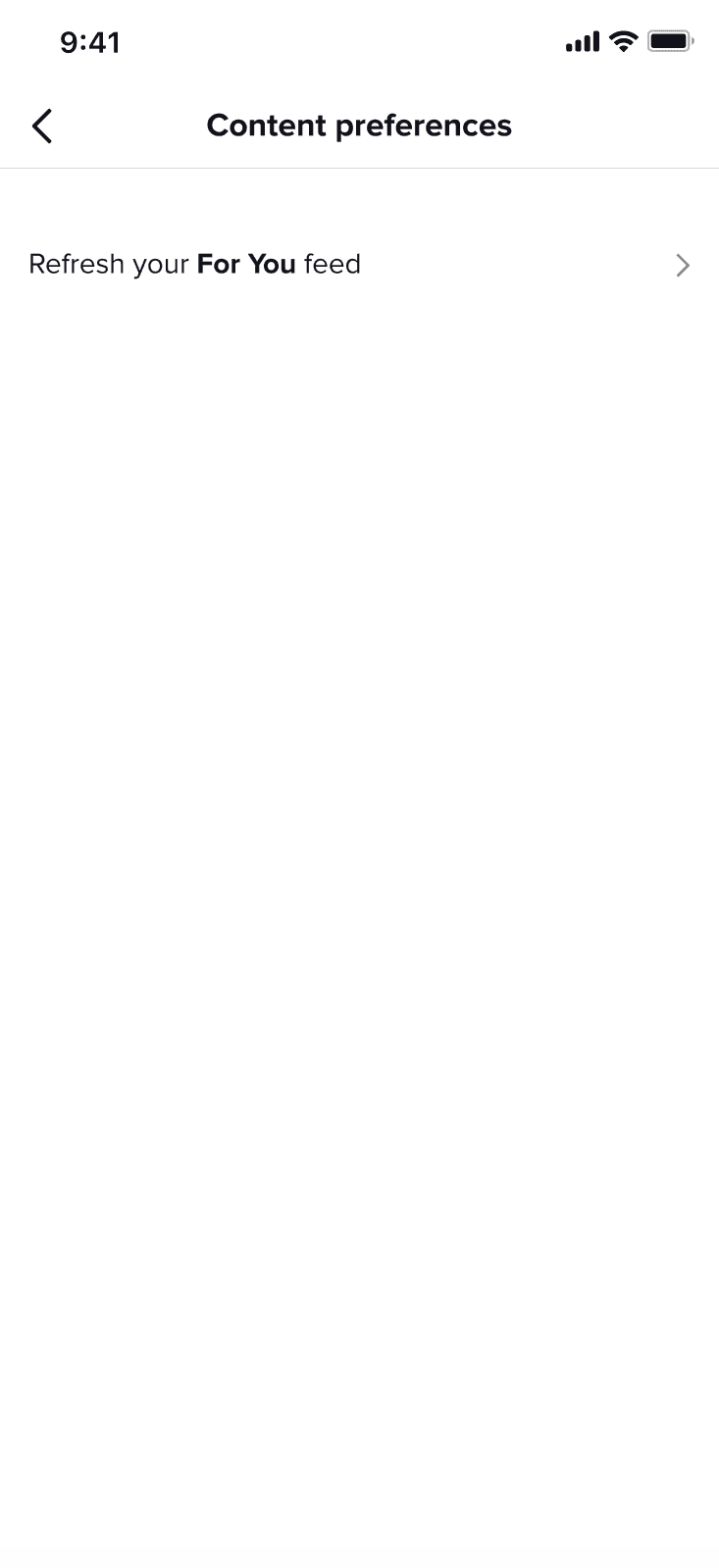
Settings entry point - "Refresh your For You feed" under Content Preferences
Confirmation modal - "Ready to refresh your feed? This action cannot be undone"
Explanation screen - "Want a fresh start?" with 3 transparency bullets about what happens
Optional feedback survey - "Why did you refresh your feed?" to gather user insights
Educational sheet - "Personalize your For You feed" with tips for rebuilding their algorithm
The biggest fight was keeping the ads disclosure - "including your ads (if relevant)":
I advocated for transparency over marketing polish—and won.
Every piece went through multiple legal and policy reviews. The key was staying agile: taking feedback seriously while always bringing conversations back to "Will users understand this?"
Users adopted it enthusiastically:
85% conversion rate after entering the refreshed For You feed
60% response rate to the optional feedback survey—unusually high
Feed diversity improved with statistically significant results
Media coverage flipped from negative to positive:
100+ media articles covered the feature after launch
100% neutral or 81% positive sentiment in press coverage
100% of mentions referenced the ability to "refresh" the feed
30% of mentions praised TikTok for addressing repetitive content
Real headlines from major outlets:
"TikTok's new feature lets you refresh your For You feed and retrain your algorithm" (TechCrunch)
"TikTok's refresh feature is for when you're sick of your For You page" (The Verge)
The bigger win was that we changed the narrative:
Before this feature: "TikTok's algorithm is harmful and opaque."
After this feature: "TikTok is giving users more control and transparency."
We turned a regulatory threat into a PR victory by designing something users actually wanted.
Honesty over marketing:
We could have hidden technical details or made exaggerated promises. Instead, I fought for clear language like "This action cannot be undone" and "including your ads (if relevant)." That honesty earned user trust.
Staying agile under pressure:
With 8+ stakeholder groups pulling in different directions, I said yes to accuracy, no to jargon, and always brought conversations back to user clarity.
Making compliance feel like a gift:
This started as a regulatory requirement. By framing it as user empowerment—"Want a fresh start?"—we made it feel like TikTok was listening, not just checking boxes.
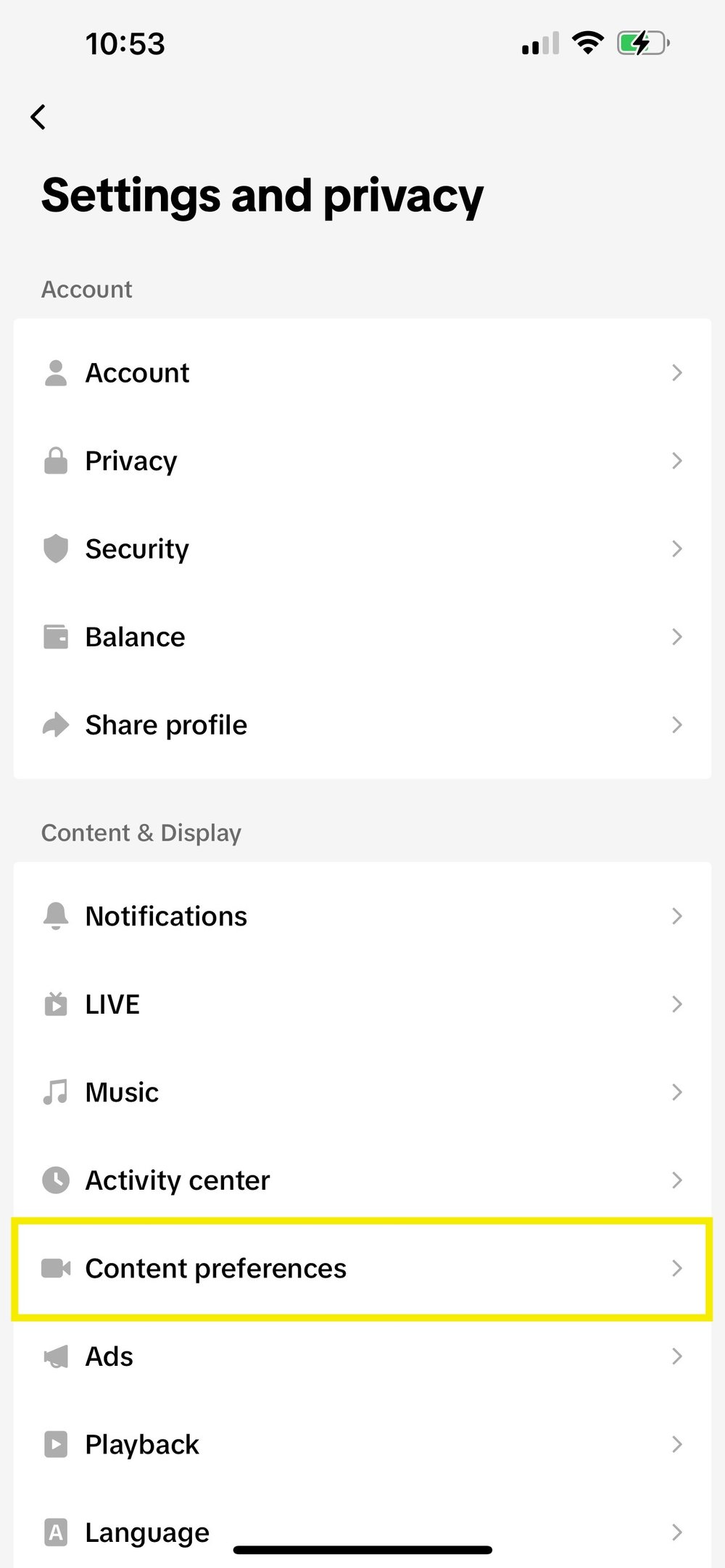
Finding the feature: Users access refresh through Settings > Content preferences, making it discoverable but not accidental.
—>
Content preferences
—>
Transparency about what happens next: The core screen balances honesty (we'll show you popular videos) with reassurance (your Following feed won't be affected).
—>
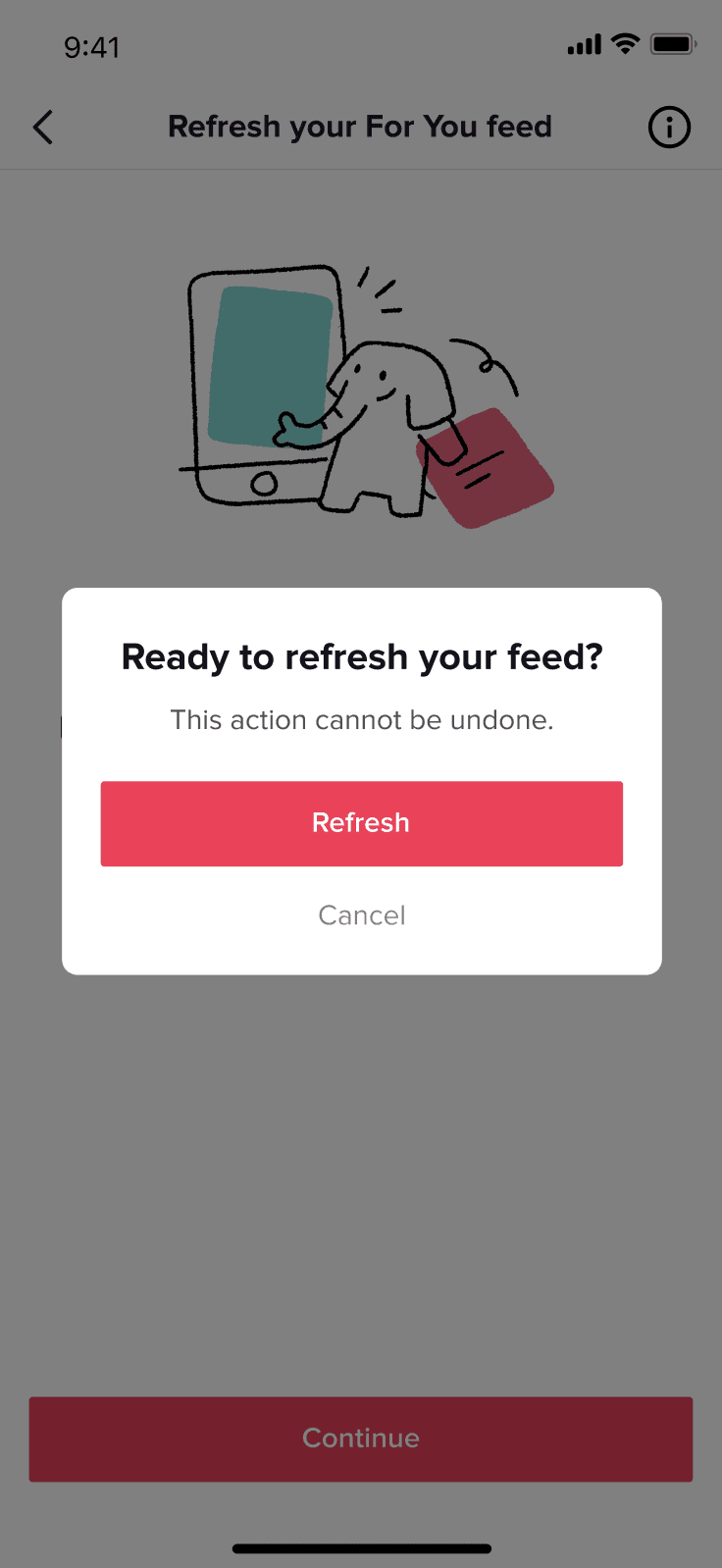
Clear warning before commitment: The modal ensures users understand this action is permanent—no surprise regrets later.
—>
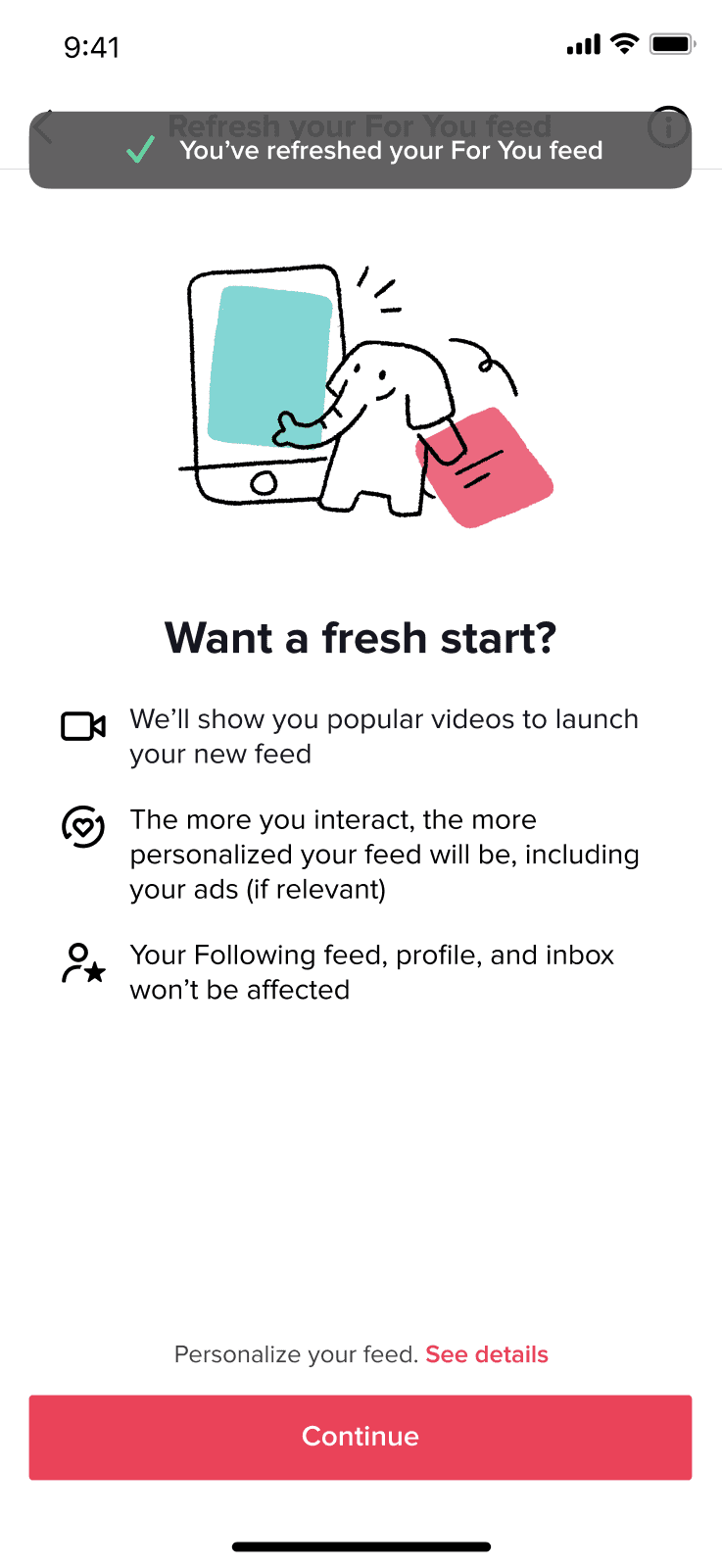
Refresh success state
—>
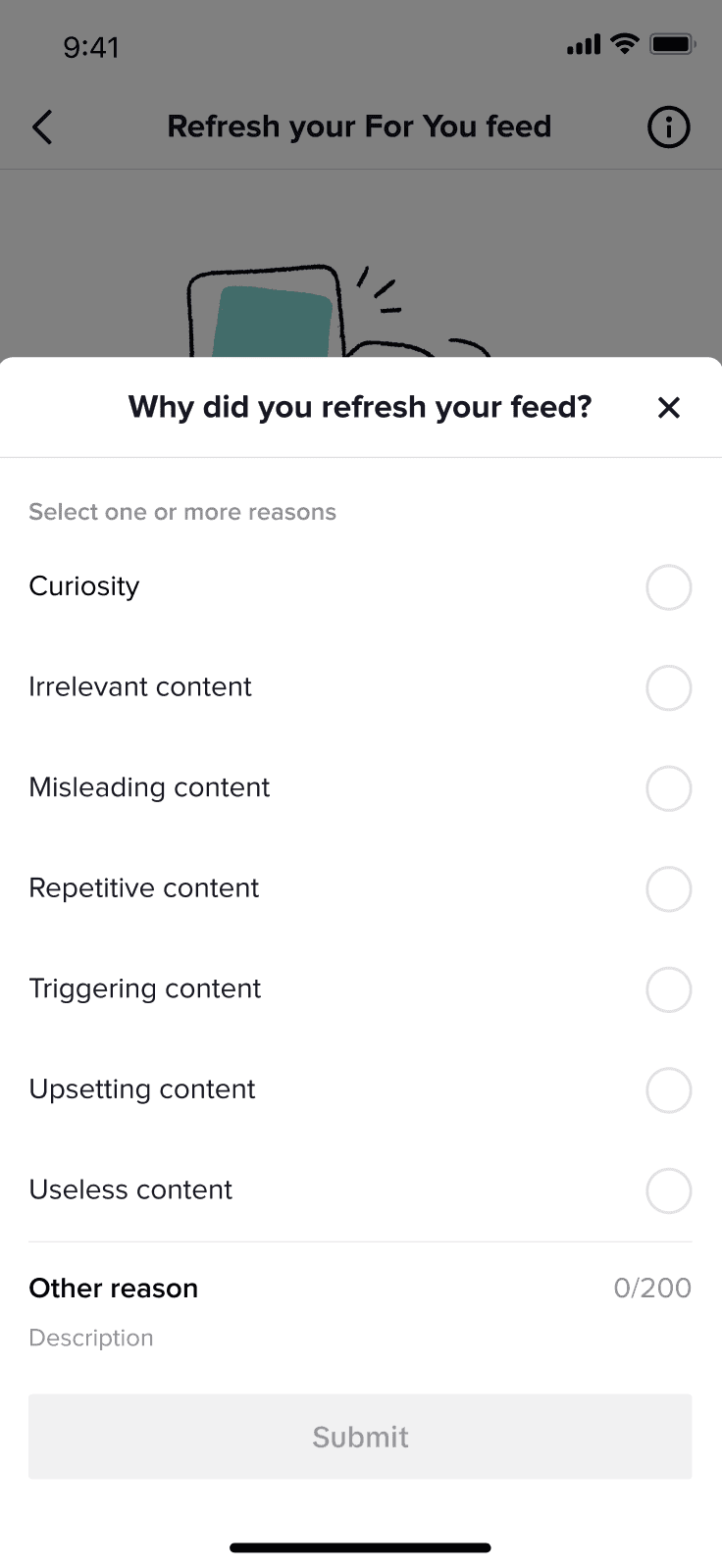
Listening to user feedback: The post-refresh survey gave us valuable data on why people used the feature—and showed users we cared.
—>
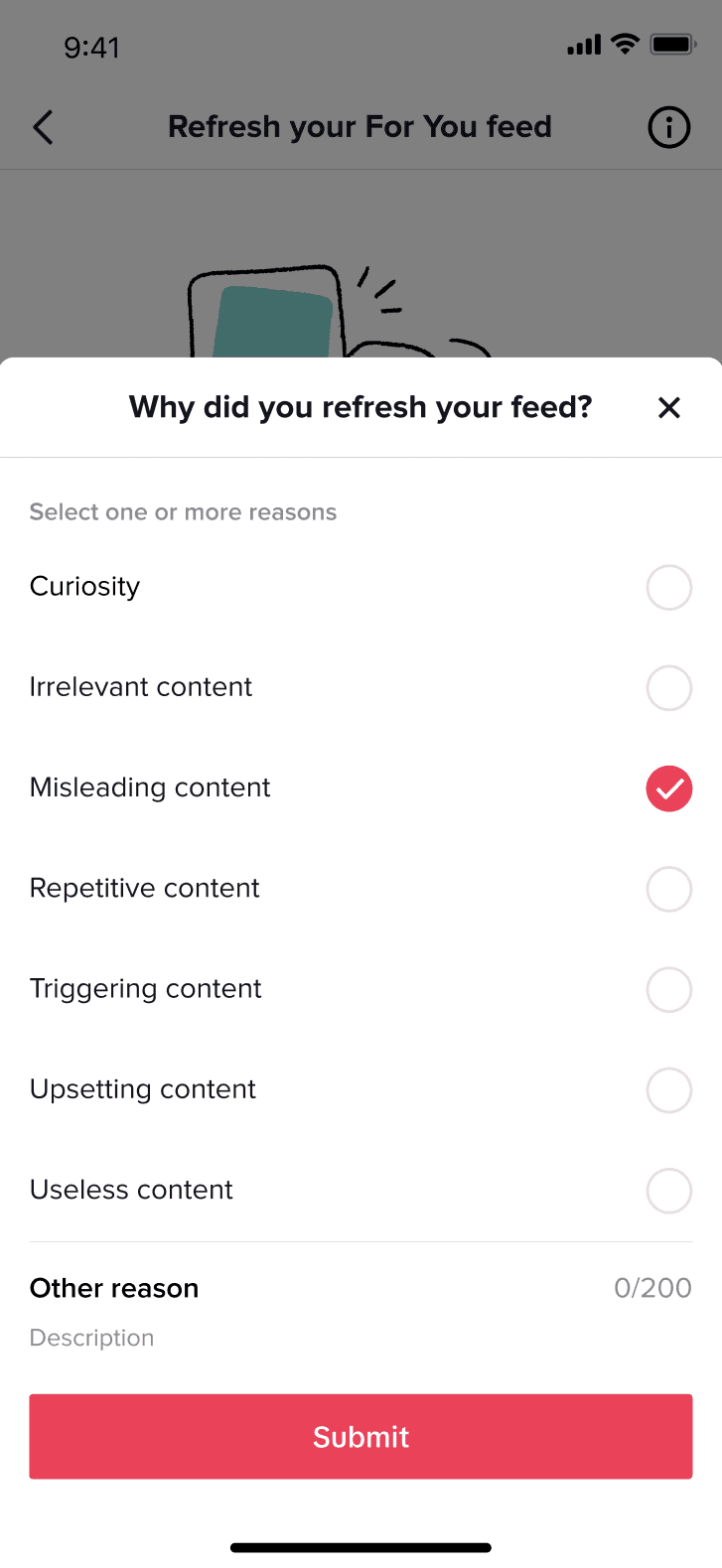
Survey (selected)
—>
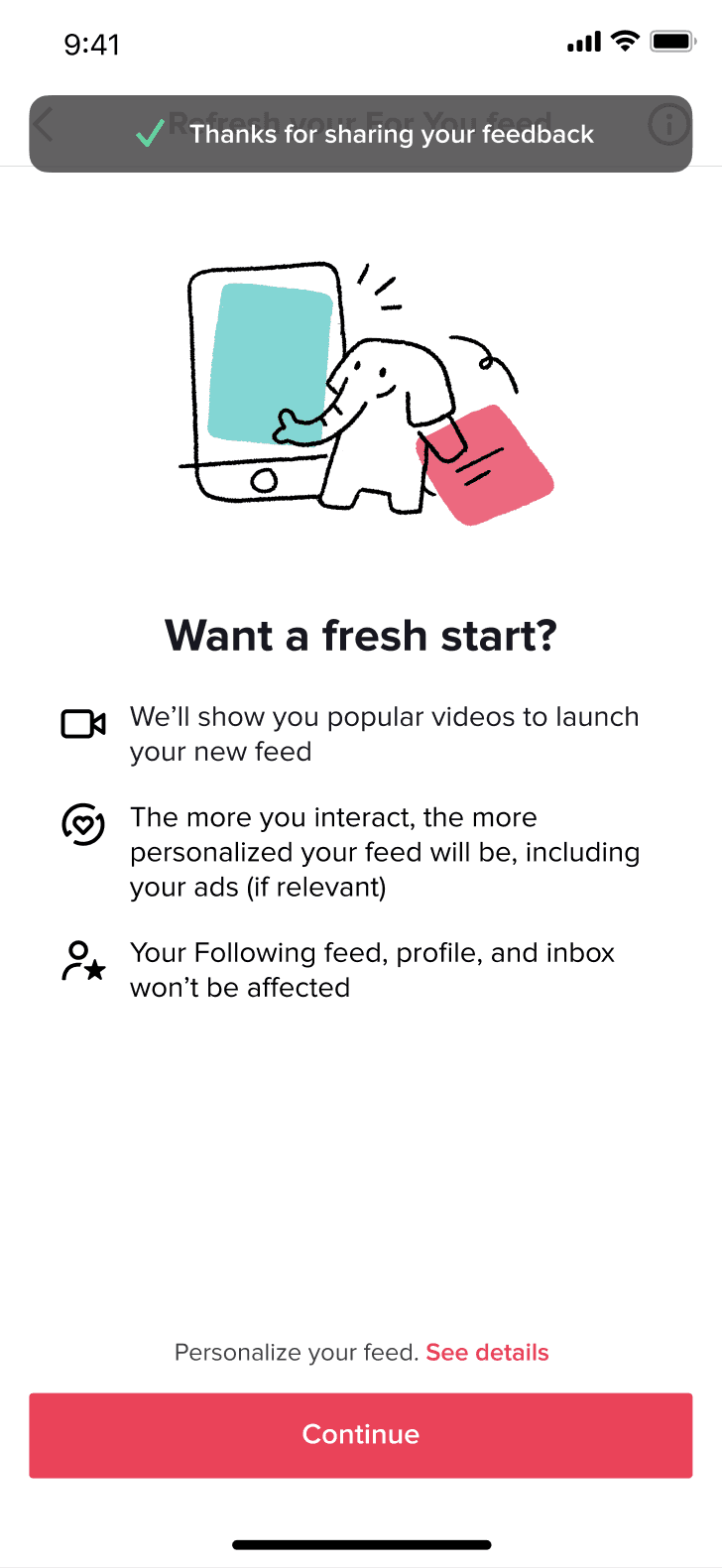
Survey success state
—>
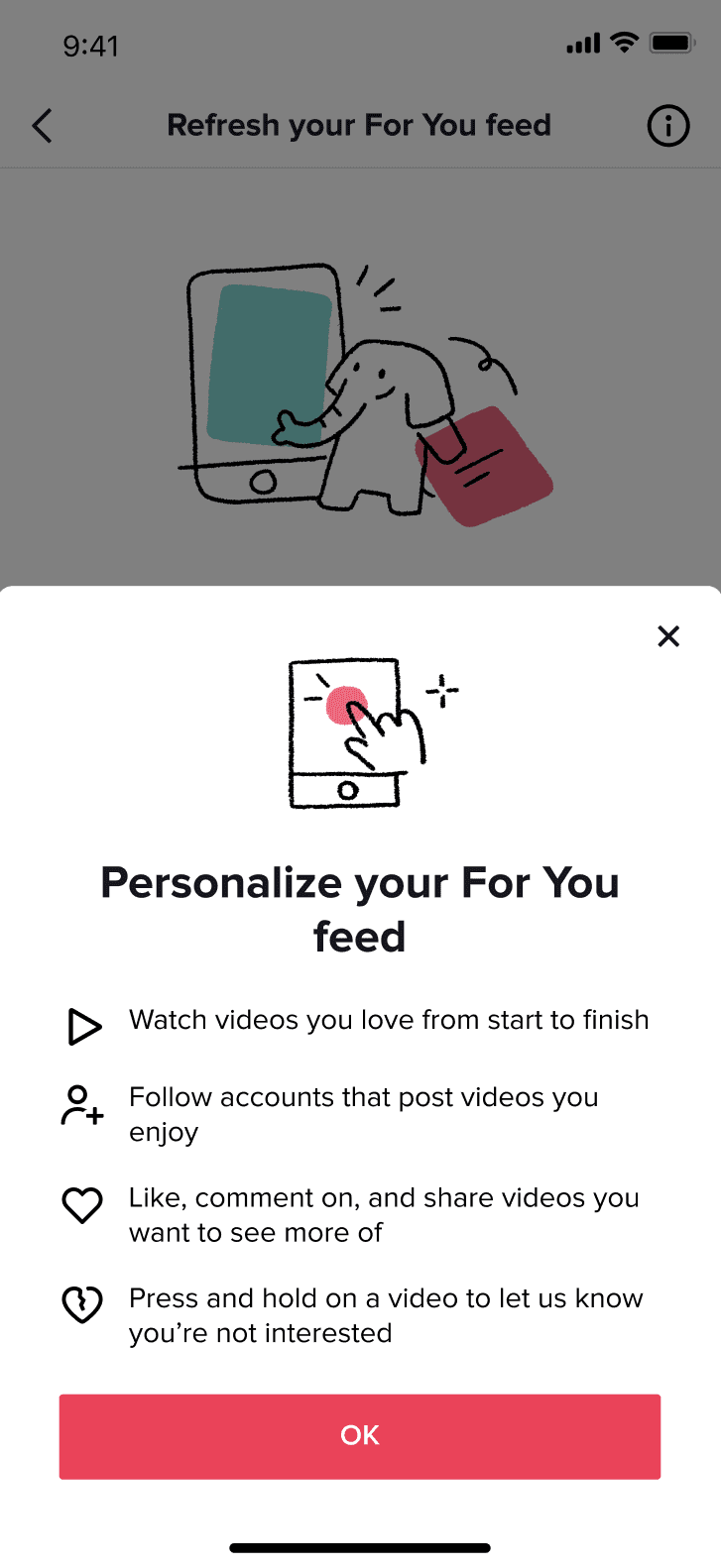
Empowering users to rebuild their algorithm: After refreshing, users get guidance on how to train their new feed—putting control back in their hands.
✓